Thursday, February 24, 2011

Research 2.0: Black History Month + Southern Cultures


Researchers take note. Southern Cultures, a quarterly publication of the University of North Carolina’s Center for the Study of the American South, celebrates Black History Month this year with a special and permanent feature you will want to see.

Dave Shaw, the publication's Executive Editor, wrote in an announcement circulated on the H-Net List on Memory Studies :
In celebration of Black History Month, Southern Cultures permanently has dedicated a new section of our website to all of our essays and features from the last decade on AFRICAN AMERICAN HISTORY AND CULTURE. This material includes interviews with many famous figures (and lesser known ones, too), as well as material which explores many aspects of the experiences of African Americans inside and outside the South. In addition, we've also been presenting featured content on our homepage to commemorate African American history: an essay from Timothy B. Tyson, author of Blood Done Sign My Name, who reveals why Martin Luther King's memory endures and what he means to the South and the nation.
To go to Southern Culture’s website, follow this link.

Also in celebration of Black History Month, Rebecca Burns gave an author’s talk last night at AARL about her new book Burial for a King: Martin Luther King Jr.’s Funeral and the Week That Transformed Atlanta and Rocked the Nation. If you get a chance to hear her, do so. You will find more on the Library's other amazing programs here.

Posted by Wesley Chenault, Library Research Associate

Thursday, February 17, 2011

Southern American Studies Association 2011 Conference: “Peoples, Publics, and Places of the Souths”


From February 17 to February 19, 2011, Georgia State University, our institutional neighbor in downtown Atlanta, hosts the Southern American Studies Association 2011 Conference, “Peoples, Publics, and Places of the Souths.” You can read about it here or peruse the program here. The Archives Division is proud to share news of grant-funded project staff and patrons who are presenting.

Dr. Barbara McCaskill and Christina L. Davis of the University of Georgia – whose research at AARL and elsewhere we’ve covered on four occassions – are presenting “The Atom Bomb of Auburn Avenue: Transregional Civil Rights Activism of J. Richardson Jones, Atlanta Daily World Reporter” as part of the session “Black Media, Black Business, Black Power.” Cheryl Oestreicher, project archivist for the CLIR Hidden Collections grant and AARL Archives blog contributor, is presenting a paper titled “Jean Childs Young: The Activist Beside the Activist” for the session “Unveiling the Complexity of Southern Social Activism.” Grace Lynis Dubinson, a graduate student in the History Department at Georgia State University and project staff for the NHPRC digitization grant, is chairing the panel “You Are What You Eat: Farming and Food as Social Markers” and presenting “Summary of the Urban Farm Movement: Cultivating Food Production in the 2009 Growing Season ‘You Can’t Eat Grass’” as part of “Uncovering Contested Spaces/Transforming Sacred Places.” Lastly, I am participating on the panel, “Practices of Public Scholarship: What public? Whose scholarship?”

The Archives Division wishes everyone well and looks forward to hearing follow-up reports from dear friends and colleagues.

Posted by Wesley Chenault, Library Research Associate

Thursday, February 10, 2011

Archives and Publics: Duncan Teague + Social Activism + Scholarship


This weekend the Archives Division of the Auburn Avenue Research Library proudly presents a two day program to announce and celebrate the donation of the Duncan E. Teague collection and to bring together scholars and activists in a symposium inspired by Teague's numerous contributions to communities in Atlanta and beyond. Details are provided in the flyer above.

In the image below, Kerrie Cotten Williams, Archivist, describes the significance of the collection in the Winter 2010 edition of Traditions, AARL's newsletter. More about Teague and the event can be read in a recent article written Dyana Bagby for the GA Voice; see here.  At almost 50 cubic feet, the collection contains Teague’s papers, those of artist/activist Tony Daniels, and the records of ADODI Muse: A Gay Negro Ensemble.


After moving from Kansas City (MO) to Atlanta in 1984, Teague went on to become a recognized and respected community leader and worker for social change as an artist and advocate. He has been involved in numerous civic, social, and political organizations, both local and national. Among them are the African American Lesbian Gay Alliance, In The Life Atlanta, Georgia Equality, the Lambda Center, Xtreme Entertainment, AID Atlanta, ARCA (AIDS Research Consortium of Atlanta), Black and White Men Together, the National Black Gay and Lesbian Leadership Forum, and Gay Spirit Visions. In 1993 and 2000, Teague served as grand marshal for Atlanta Gay Pride.

For more than twenty years, Teague has worked in HIV/AIDS prevention, education and research. In addition to being a senior member of ADODI Muse, he is a facilitator of spiritual and health related workshops throughout the United States. Today, Teague is a third year seminarian in the Master of Divinity program in the Candler School of Theology at Emory University. He is married to his long-time companion, David Thurman.

Please join us for a memorable evening of celebration and an afternoon of engagement.  

Posted by Wesley Chenault, Library Research Associate

Friday, February 4, 2011

“These Legs Were Not Made to Kick a Football”


In preparation for Super Bowl XLV, earlier this week we featured a post about the Brown Bombers, a professional all-black football team based in Harlem in the 1930s. Fritz Pollard, the team’s founder, used creative methods to promote the team, including publishing The Brown Bomber Journal. Several issues of the journal are in our rare periodicals collection.

The Brown Bomber Journal was a news magazine with a bit of something for everyone. Pollard recognized that the black elite frequently came from the fields of sports and entertainment, and thus had much in common. Both top athletes and entertainers received wide acclaim for their accomplishments, were highly paid, and often had to develop signature styles to stand out and achieve success in the white-dominated establishment. Therefore, it made sense to cover topics of interest to the elite (and to the aspiring elite) in one publication.


Unsurprisingly, the Brown Bombers are highlighted throughout the magazine. The sports section introduces the players, noting their stats, honors, and playing history. The accompanying photographs, pictured above to the left, capture the Brown Bombers in poses that highlight their athleticism.


The magazine’s society pages include photographs and announcements about travel plans and social events. A photograph of a Bombers fan is also featured prominently. The fashion section, above to the right, illustrates popular designs of the Fall 1936 season, whose rich colors were influenced by the impending coronation of Edward VIII of England.


Advertisements fill the journal’s back pages, providing a glimpse into the types of services and products that were used by and marketed to African Americans. Even among the ads, there is an announcement to promote the Brown Bombers through a popularity contest for young ladies, pictured above. Women who sold the most tickets were eligible for prizes, including a raccoon fur coat, diamond ring, and clothing.

As a source of popular culture, The Brown Bomber Journal is fun to look at. At the same time, the magazine also provides a wealth of historical information about the educational levels, professions, family connections, and social activities of black New Yorkers in the 1930s.

References:

John Carroll, Fritz Pollard: A Pioneer in Racial Advancement (Urbana: University of Illinois Press, 1992)

Posted by Krystal Appiah, Brown University, former AARL Archives Intern

Monday, January 31, 2011

Treasures from the Vertical Files: Fritz Pollard’s Brown Bombers


Just in time for Super Bowl XLV, today’s treasure is a collection of football programs for the Brown Bombers, an all-black professional football team based in Harlem in the 1930s. Although many people are familiar with the Negro Baseball League, less well-known is the brief period of segregation in professional football (1933-1946), which led to the creation of all-black teams such as the Brown Bombers and Chicago Comets.

Professional football began in the 1890s in local athletic clubs. While these local teams had a small base of fans, football remained relatively obscure compared to nationally prominent pro sports, such as baseball or boxing. In an effort to popularize football, teams encouraged all talented athletes, regardless of color, to join them. Star African American players, such as Charles Follis, Paul Robeson, and Fritz Pollard, pictured below, were sought after to win games and draw spectators. Nevertheless, black players faced verbal and physical abuse from white fans and opponents. Hotels and restaurants that excluded black players caused indignities and logistical problems when teams travelled.


By the late 1920s, as football became more accepted nationally and white players vied to join teams, team owners began releasing black players. The high unemployment rates of the Great Depression put additional pressure on teams to hire white players. In addition, owners wanted to avoid the controversy of integrated teams in order to retain their new-found audiences. As a result, in 1933, white team owners in the National Football League (NFL) formed an unwritten, “gentleman’s agreement” to bar black players from the league. Although a few regional leagues continued to hire a handful of black players, the NFL dominated the sport.


In response, Fritz Pollard, a former pro football player and coach, assembled and coached the all-black Brown Bombers in 1935. Based at Dyckman Oval in Harlem, the Bombers provided a showcase where talented black players could compete professionally. Pollard hoped to counter the obviously false claims by white team owners that they could not find capable black players. Pollard also attempted to schedule exhibition games against local white teams to show that black and white football players could compete without incident. Pollard recruited former top African American players from white and black colleges, as well as some non-college players. At one point, Howard “Dixie” Matthews, pictured below, a former end for the Providence Steam Roller, anchored the Bombers.


Despite the talented roster, the Brown Bombers struggled to overcome low attendance. In order to draw audiences, Pollard instituted stunts and unusual plays. The Bombers’ truckin’ and singing as they proceeded to the scrimmage line became a trademark of the team. The Bombers also developed unorthodox formations, such as the “aeroplane shift” to mystify their opponents and entertain crowds. Although the Bombers’ showmanship was popular with Harlem fans and increased game attendance, the team still did not make enough money to generate a profit.

In 1938, a competing team gained exclusive use of Dyckman Oval, leaving the Bombers without a suitable stadium in which to play their home games. Discouraged by the loss of their home and white team owners’ continued failure to sign his players, Pollard resigned as coach of the team. The Bombers continued as a road team until the early 1940s.

Efforts by civil rights organizations eventually led to the desegregation of professional sports, including the reintegration of the NFL in 1946. Unfortunately, by that time, most of the great black players of the 1930s were too old or too injured to play in NFL. However, by creating opportunities for African Americans to play pro football and by battling segregation, Fritz Pollard and the Brown Bombers formed an underappreciated front in the Civil Rights Movement.


References:

John Carrol, Fritz Pollard: A Pioneer in Racial Advancement (Urbana: University of Illinois Press, 1992)

Charles K. Ross, Outside the Lines: African Americans and the Integration of the National Football League (New York: New York University Press, 1999)

Posted by Krystal Appiah, Brown University, former AARL Archives Intern

Thursday, January 27, 2011

Archives and Publics: Rebecca Burns + "Burial for a King" + Research


On Thursday, February 24, 2011, author and journalist Rebecca Burns will discuss her new book, Burial for a King: Martin Luther King Jr.'s Funeral and the Week that Transformed Atlanta and Rocked the Nation. Read about it here. The event takes place at 7:00 p.m. in the Authors’ and Writers’ Lounge on the 3rd floor and is free and open to the public. If you are in the area, it will be an amazing opportunity to see Burns, as AARL is one of the many research libraries she used to write the book. Copies will be available for purchase.

If you aren’t familiar with Rebecca Burns, spend a few moments here. While well-known as former editor in chief and, now, interactive director at Atlanta magazine, she also is a prolific writer who has published three books in a relatively short amount of time. In addition to Burial for a King, Burns is author of Rage in the Gate City: the Story of the 1906 Atlanta Race Riot, now in its second edition, and Atlanta: Yesterday & Today.

While an accomplished journalist and author, Burns is featured in this post for another reason. She’s an advocate and user of archives. Pick up any of her books, and you will find evidence of exhaustive research through lists of primary and secondary sources, which sometimes include informative notations. I witnessed firsthand the countless hours Burns spent researching AARL collections for Atlanta: Yesterday & Today and Burial for a King; some weeks she worked concurrently on both projects. Throughout months and months of research, Burns exhibited great rigor, thoroughness, and passion.  

The relationship between archivist and researcher is often a collaborative process filled with leads, dead ends, and discoveries. But there’s more to research than this one-to-one relationship. As the editors of Beyond the Archives: Research as Lived Process note, “the process [sic] of research itself creates new knowledge, not just published results” (p. 6). It is generative, transmissive. In other words, those involved in the process are changed as a result of new information and, in turn, change others through intellectual exchange. Examples at hand are an author’s talk or an archivist’s blog post. Both become settings through which findings and information are delivered and meaningful conversations can occur, whether it’s through a question and answer session or comments section.

Please join us Tuesday, February 24th, for what promises to be a wonderful evening of learning and dialogue.


References:

Rebecca Burns, Rage in the Gate City: The Story of the 1906 Atlanta Race Riot, 2nd ed., (Athens, GA: University of Georgia Press, 2009)

_______, Atlanta: Yesterday & Today (Lincolnwood, IL: Publications International, Ltd., 2010)

_______, Burial for a King: Martin Luther King Jr.'s Funeral and the Week that Transformed Atlanta and Rocked the Nation (New York: Scribner, 2011)

Gesa E. Kirsch and Liz Rohan, eds., Beyond Archives: Research as Lived Process (Carbondale, IL: Southern Illinois University Press, 2008)

Posted by Wesley Chenault, Library Research Associate

Thursday, January 20, 2011

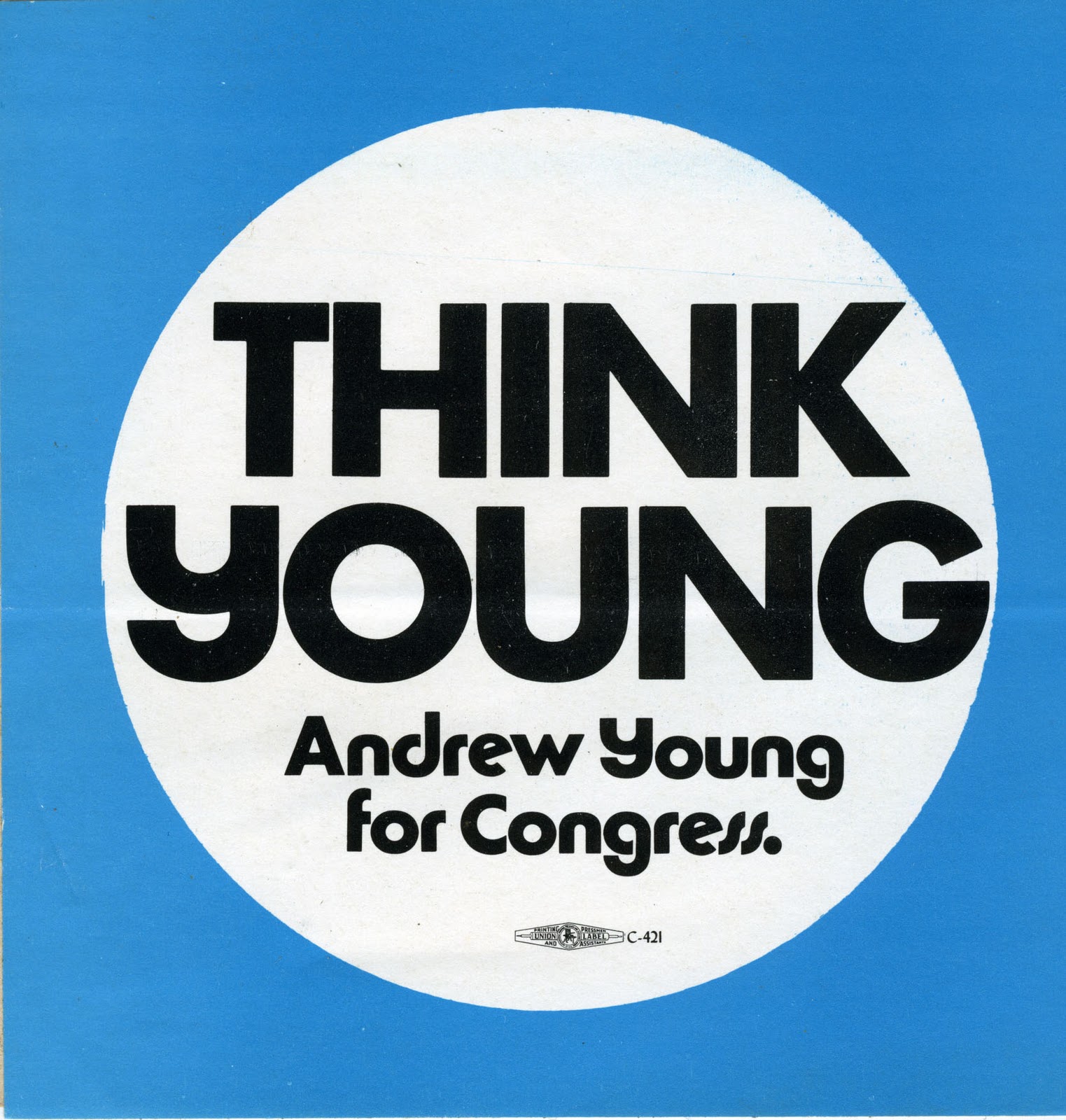
The Opening of the Andrew J. Young Papers

SAVE THE DATE!

On Sunday, March 6, the Auburn Avenue Research Library will host an event to celebrate the opening of the Andrew J. Young Papers.

In 2009, the archives received a grant from the Council on Library and Information Resources to process the collection. It documents the various aspects of his career and family life spanning more than 50 years, including his positions as a minister, civil rights activist, Congressman, Ambassador to the United Nations, Mayor of Atlanta, Co-Chair of the 1996 Atlanta Committee of the Olympic Games, and his involvement with Law Companies Group, Inc. and GoodWorks International.

The collection contains correspondence, speeches, press releases, calendars, books, minutes, reports, publications, articles, photographs, artifacts, textiles, trophies and awards, artwork, posters, programs, invitations, campaign memorabilia, manuscripts, travel documents, notes, sermons, ephemera, and audio-visual material.

More details to come soon. We hope you can join us to celebrate this momentous occasion!

Posted by Cheryl Oestreicher, Project Archivist