Showing posts with label archives. Show all posts

Thursday, July 5, 2012

To Keep or Not to Keep: What's Really in the Archives

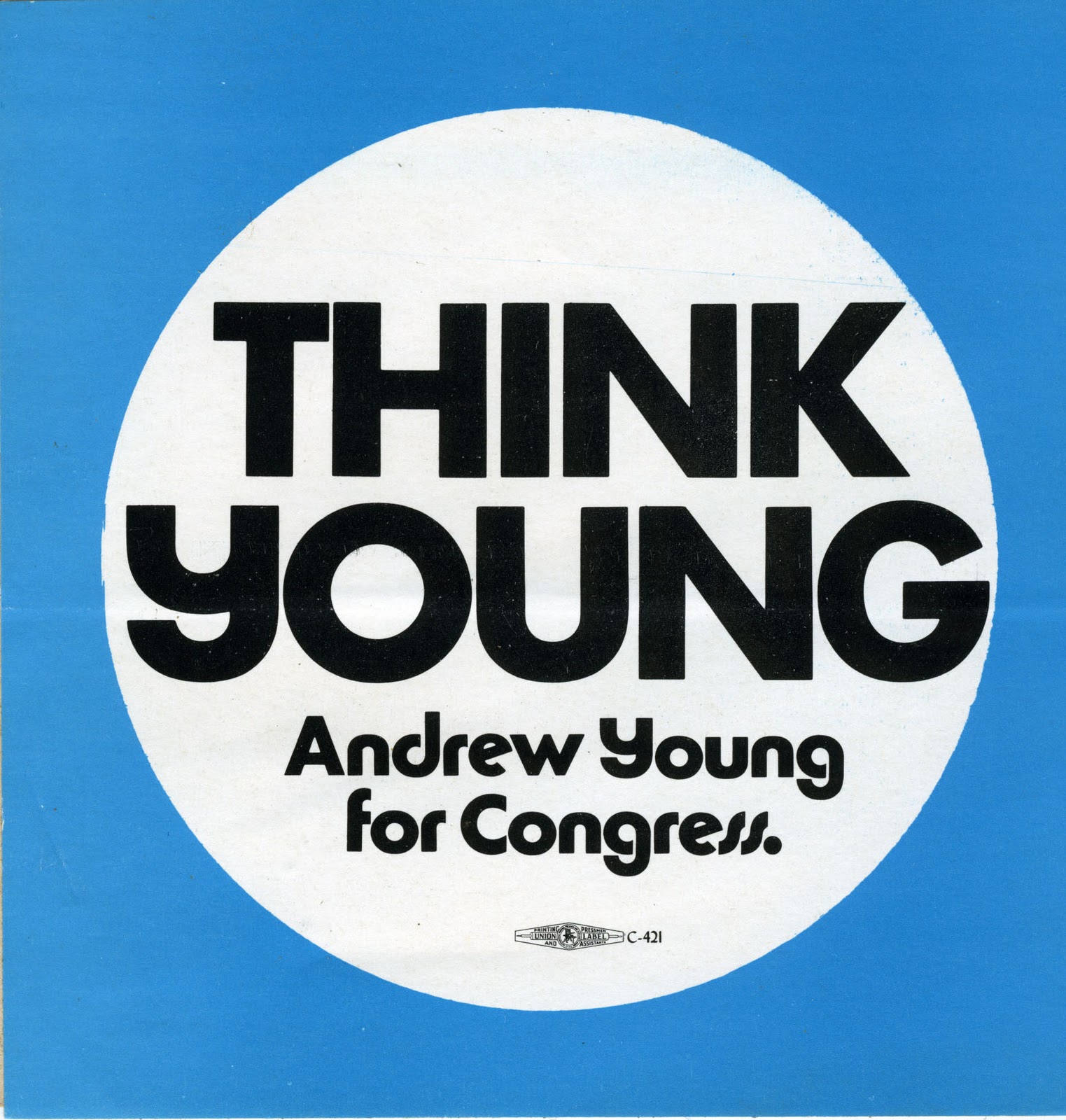
Andrew J. Young Papers, AARL Archives Division

You never really know what you might find in the archives. This is part of the excitement- both for a researcher looking at a collection for the first time, but also for the archivist processing the collection before it is open to the public. Researchers hope for that special something that will help strengthen their thesis or that document they weren’t expecting that might set their work apart from other previous work. It is not the job of the archivist to interpret documents for future researchers, but, in deciding what to keep and what not to keep- what we call appraisal- it is important to consider what kinds of questions future researchers might be interested in. In Gregory S. Hunter’s Developing and Maintaining Practical Archives, Hunter argues that “the archivist must be aware of current research trends and interests, using this information to extrapolate what may be of interest to future researchers. This is a weighty responsibility” (Hunter, 52).

This responsibility is one that archivists at Auburn Avenue Research Library, like all archival repositories, take very seriously. When donors give collections to a repository, they typically sign a deed of gift agreement that lays out the guidelines for the collection. Donor agreements vary widely- some donors give archives free reign to open anything found in the collection to the public. Other agreements may specify that any sensitive information, such as documents containing personal information, remain closed for a period of time. These agreements are necessary because donors are entrusting our archives with their papers- whether they are family or individual papers, or their life’s work. Often, even if a person is donating his/her own papers, one may not realize everything that it is in the collection. Some collections are so large and, in the case of politicians or business collections that have been handled by many people, the donor may not realize that someone’s family photos or birthday cards or cigarette cartons, may be hiding in a box. In these cases, the archivist may refer to the deed of gift agreement for clarification, or, in the case of the cigarette carton or candy wrapper, simply discard it; unless the carton is very old and in good enough condition that it might make an interesting exhibit piece. You can see where this gets complicated, even with items that might seem like everyday trash.

Of course, there are times when an archivist may find documents of greater concern, either because of privacy issues or because the document’s potential research value is outweighed by its salacious nature. Medical records, adoption records, and disturbing or violent photos are just a few examples- in these cases, archivists would close or destroy the items to protect the parties involved. If the donor is still alive, the archivist may even return the items in question.

As Hunter said, appraisal is a “weighty responsibility” indeed. Every repository is constrained by space and storage concerns and even if we want to, we just can’t keep everything. That is why archivists at AARL spend a great deal of time processing collections, thinking about what visiting researchers might be interested in, and doing our very best to honor those whose papers we’ve collected.

Developing and Maintaining Practical Archives: A How-to-do-it-Manual. 2nd edition. Gregory S. Hunter. New York: Neal-Schuman Publishers, Inc. 2003.

Jessica Perkins-Smith, LSU MLIS graduate student, AARL Archives Intern

Tuesday, June 12, 2012

Documenting Sports: 100% Wrong Club of Atlanta


Mrs. Margaret Jacobs donated the historical records of the 100% Wrong Club to the Auburn Avenue Research Library. The majority of the records were collected by her late husband, Joseph H. Jacobs, a member of the club.  Established in 1934 by the Sports Department of the Atlanta Daily World, the club’s members surveyed college teams and athletes for recognition and awards. The club has expanded its scope by continuing to recognize and award college and high school athletes, local community leaders, and national pioneers in the field of sports and social justice. Each year, after the college bowl games, the club selects college and high school student athletes to attend the annual "Sports Jamboree" weekend. The collection includes photographs, minutes, news clippings, correspondence and ephemera.

The collection is now available for use:   http://aafa.galileo.usg.edu/aafa/view?docId=ead/aarl0011-007-ead.xml;query=wrong;brand=default

Posted by Kerrie Cotten Williams, Archivist and Manager of the AARL Archives Division

Saturday, November 19, 2011

Mrs. Dorothy Lee Bolden, Founder and President of The National Domestic Worker's of America, Inc.

The Arab Spring and Occupy Wall Street movements have brought to the forefront many social issues not prevalent in mainstream media. These movements garnered national and international support via social media. However, there have been strong voices that have been working and organizing on behalf of the underrepresented citizens for many years.

Dorothy Lee Bolden was the founder and president of the National Domestic Worker's Union of America. Mrs. Bolden started as a Domestic Worker at the tender age of nine and continued working in the trade for forty-one years. She was involved in the civil rights movement with her then neighbor Dr. Martin Luther King Jr. He encouraged her in community organizing against the Atlanta School Board decision to condemn a neighborhood school. She used the experience as a catalyst to organize her colleagues. Mrs. Bolden became a sounding board for many women and their experiences working for families residing in the exclusive areas of Atlanta. Domestic workers endured 13-hour days with low pay from $ 3.50 to $5.00 in 1960. In 1968 Dorothy Bolden started discussions with other unions about a national union for maids.

Organization and education were critical for community organizing. Maids were negotiating with private families and not corporations. With the assistance of the Urban League, Atlanta radio station WAOK and wider community support, these women were able to improve their working conditions. Dorothy Bolden exclaimed, “We aren’t Aunt Jemima women, and I am sure to God don’t want people to think we are. We are politically strong and independent.” Her organizing efforts gained the attention of the Nixon Administration and she was later appointed to an advisory committee on social services and welfare. Mrs. Bolden spent her time advocating for training and education for domestic workers, while tirelessly supporting community efforts for affordable city services and housing.

Dorothy Lee Bolden eventually organized 10 cities and had 13,000 women benefiting from job referrals and organizing. An Atlanta icon, Mrs. Bolden stated “These women are still struggling. These women have built this country with the sweat of their brow. Their parents worked in the fields. You look over your shoulder and wonder if the field is still there.” Dorothy Lee Bolden started a grassroots movement in the South that went national. Her story might offer some insight for social and political movements on the fine skills of organizing and negotiation.

AARL houses and makes available the Dorothy Lee Bolden Papers http://tinyurl.com/6wy8hgg
Posted by Ayannah Zafir, Archives Library Associate

Thursday, September 8, 2011

Remembering a Labor Day Hero: Dorothy Lee Bolden Thompson

Dorothy Lee Bolden Thompson, circa 1970

Although many of us enjoy celebrating the Labor Day holiday weekend with cookouts, parties, or restful leisure activities, reflection over the holiday’s purpose is often the last thing on our minds. The federal holiday was made official in the 1890s to atone for the country’s violent response to the infamous Pullman Strike. It was also a way to commemorate the hard work of American employees and the courage of labor organizations that lobbied to improve ill-working conditions, reduce work hours, increase wages, and to act as mediators between profit-driven industries and neglected employees.

There is evidence of the undeterred efforts of labor unions and the people that were instrumental in creating union branches within our very own archive. Dorothy Lee Bolden Thompson mobilized community members and organized protests with her then neighbor Dr. Martin Luther King, Jr., during the Civil Rights movement. As a community activist, she drew from her Civil Rights organizing experience and personal employment past to develop the National Domestic Workers Union of America, Inc., which successfully improved the wages and working conditions of domestic workers in Atlanta, and other U.S. cities.

With bestsellers and blockbuster hits like “The Help” reminding today’s moviegoers of the daunting task of caretaking for Southern white families in the 1960s, it is empowering to know one of Atlanta’s very own was instrumental in improving the lives of domestic workers who really did in fact endure challenges and inequalities. Let us never neglect to remember our labor champions, the reason for the holiday.

For more information on the life and achievements of Dorothy Lee Bolden Thompson and her work with the National Domestic Workers Union of America, Inc., visit AARL to view the Dorothy Lee Bolden Thompson Collection. Also have a look at a recent blog post from one of our researchers, Daniel Horowitz Garcia, which features even more additional resources.


References:

Green, James. Death In the Haymarket: A Story of Chicago, the First Labor Movement and the Bombing that Divided Gilded Age America. New York: Anchor Books, 2007.


Posted by Yewande Addie, AARL Intern

Thursday, September 1, 2011

AARL home to Amelia Boynton-Robinson papers

Left to right, Dick Gregory and Amelia Boynton-Robinson, Auburn Avenue Research Library, August 2011

The Auburn Avenue Research Library is now home to the Amelia Boynton-Robinson papers. At 100 years old, Mrs. Boynton-Robinson, pictured above right, is an activist/organizer, speaker, playwright and author. Born in Savannah, Georgia, she is the oldest living graduate of Tuskegee University. Mrs. Boynton-Robinson worked closely with civil rights leaders to plan and strategize rural and regional efforts. Her home in Selma, Alabama, was a meeting place for leaders during the 1960s, including Martin Luther King, Jr., Joan Baez, John Lewis, and Andrew Young. Mrs. Boynton-Robinson along with her husband, Samuel, organized Alabama residents in voting rights campaigns and civil rights activities. Mrs. Boynton-Robinson’s collection reflects her wide range of activities and includes, newspaper clippings, awards, letters, ephemera and photographs. The collection is approximately 8 cubic feet and will be open for research once processed. 

Posted by Kerrie Cotten Williams, Archivist

Sunday, August 21, 2011

Full Circle: Mentoring and Internship Programs in Archives

Pictured above is former AARL Archives Intern Maya Thomas, who processed the Charmayne Johnson family papers.

On Saturday, August 27th, Kerrie Cotten Williams and I participate on the panel "Fostering a Diverse Profession: Mentoring and Internship Programs," at the annual meeting of the Society of American Archivists in Chicago. We will be joined by Erika B. CastaƱo (University of Arizona), Steven D. Booth (National Archives and Records Administration), and former AARL intern Krystal Appiah.

Kerrie is moderating the panel, while I present about AARL's Archives Internship Program, which I coordinate and manage. As I prepare my presentation, I am reflecting on the role mentoring plays in the program. In Archival Internships: A Guide for Faculty, Supervisors, and Students -- one of the only texts on the subject -- authors Jeannette A. Bastian and Donna Webber write mentoring "may be the most valuable contribution that supervisors can make to an intern's education" (42). Though I'm still formalizing my ideas on "value" in the contexts of professional development, education, and ethics, I certainly agree with the authors that mentorship is a subject that deserves greater attention than it has received in professional literature.

As I continue to think about meaningful measures and outcomes for AARL's Archives Internship Program, it is gratifying to take pause and acknowledge the successes that former interns have achieved in a highly competitive job market. Towards the end of her internship, Krystal Appiah's blog entries caught the attention of the editor of the African American National Biography, who asked her to write an entry about Mary Parks Washington, which is now published. Since graduating from Brown University in May, she has kept busy as a participant in the HistoryMakers' Increasing African American Diversity in Archives Fellowship. Nicole Carmolingo, a major contributor to the blog, published an entry on Henry Rutherford Butler for the New Georgia Encyclopedia. Her second entry about the Big Bethel A.M.E. Church in Atlanta is forthcoming, and she recently began work fulltime as a project archivist in a for-profit setting. Another former intern, Rico Hall, just began the new Master of Archival Studies program at Clayton State University and is working on a special project at the Martin Luther King Jr. Center for Nonviolent Social Change.

While I cannot take credit for their successes, I can say that mentorship plays an important role in AARL's Archives Internship Program. Here, informal conversations about the profession are common, and for interns who ask (and do good work), letters of recommendation and referrals are easy to come by. We intentionally foster a supportive environment for discovery, exploration, and dialog because the intern and mentor relationship is reciprocal and mutually beneficial. All the time and energy comes back full circle.

Posted by Wesley Chenault, Library Research Associate

Monday, August 15, 2011

Donors as Advocates: Duncan E. Teague


I was doing a bit of housekeeping recently when I came across an overdue idea for a post -- donors as advocates. Earlier this year, February 11th-12th, readers may recall that AARL held a two day program to announce and celebrate the donation of the Duncan E. Teague collection, which includes the invitation pictured above. (Teague is a founding member of ADODI Muse.) On Saturday, February 12th, WABE aired Rose Scott's interview with Teague, who spoke about the importance of preserving the past, especially that of underrepresented communities.  Listen here.

While advocacy in the field is not a new topic, per say, it is one that remains relevant, especially in uncertain economic times. These days we all are expected to do more with less, and AARL is grateful to have the support of patrons and donors, like Duncan Teague, whose familial, social and professional networks reach far beyond the walls of the library.  

Two publications are listed below for those interested in reading about advocacy and archives.

References:

Finch, Elsie Freeman. Advocating Archives: An Introduction to Public Relations for Archivists. Chicago: Society of American Archivists and Scarecrow Press, Inc., 1994.

Hackman, Larry J., ed. Many Happy Returns: Advocacy and the Development of Archives. Chicago: Society of American Archivists, 2011.


Posted by Wesley Chenault, Library Research Associate

Tuesday, August 9, 2011

GHRAB Award: UGA's Dr. Barbara McCaskill and Christina L. Davis


Yesterday, I was informed that the Georgia Historical Records Advisory Board (GHRAB) selected Dr. Barbara McCaskill and Christina L. Davis's project “J. Richardson Jones: The Atom Bomb of Auburn Avenue” for a 2011 “Research Using the Holdings of an Archives” Award.

A statewide program, GHRAB awards exceptional efforts in archives and records work. To appreciate the scope and depth of their project, which included many research hours in AARL's Archives Division, read the 1-page description below. The poster pictured above, from the Atlanta Life Insurance Company Records, advertises one of Richardson's works, "Parade of Negro Progress."
   
 
Congratulations!
 
Posted by Wesley Chenault, Library Research Associate

Wednesday, July 20, 2011

Exhibit on African Name Origins on loan from Emory @ AARL

"African Origins: Africa's History in a Name," an exhibition of materials from the Emory University libraries, is currently on exhibit at Auburn Avenue. The exhibit is located on the first floor of the building, in the library's reading and reference room.

The exhibit features reproductions of photographs and drawings from the slave trade, as well as route maps and other historical information. A focus of the African Origins project is getting public involvement in collecting information about African names of those slaves transported over the Atlantic. You can both search and contribute information to their database at African Origins. The exhibit will be on display during library hours through October 30, 2011.

Posted by Jessica Epstein, AARL Archives Intern

Friday, July 15, 2011

Life & Times of Robert Small, freed slave and U.S. Congressman


Currently on display in the Cary McPheeters Gallery @ Auburn Avenue: The Life and Times of Robert Small. Small lived from 1839-1915. Born into slavery in South Carolina, Small went on to free himself and his family by comandeering a Confederate ship to Charleston harbor. He later served in the South Carolina state legislature and represented South Carolina as a U.S. Congressman.

Photographs, drawings, ship models and other documents and artifacts representing Small's personal and political life are currently on view in the gallery on the library's first floor. The opening event is next Sunday, July 24, and Donald Sweeper will be performing a reenactment as Robert Small. The exhibit will continue to show through September 18, 2011. You can read more about the exhibit here.

Posted by Jessica Epstein, AARL Archives Intern

Thursday, July 7, 2011

Archives and Publics: "Harriet Rising"


The Archives and Publics series highlights connections between archives and various publics – artists, scholars, genealogists, students, documentary filmmakers, authors, and others – and the ways in which different groups access and use archives, with a focus on AARL's constituents.

Today's post features Harriet Rising, a collaboration between artist Lisa Tuttle and writer and activist Alice Lovelace, part of a large temporary public art project titled Elevate: Art Above Underground, presented by the Atlanta Office of Cultural Affairs.  Harriet Rising and other installations open August 26th in downtown Atlanta.


Tuttle contacted the Archives Division, hoping to locate images of Harriet Tubman, which will cover various portions of eight four-sided columns, installed in clusters of four on either side of Pryor Street, along the Upper Alabama pedestrian corridor above Underground Atlanta.  Since some of the images will be enlarged to cover the 8' x 3' columns, she needed high resolution images, which AARL was able to deliver.  

In Tuttle and Lovelace's narrative description of the project, they identify several goals that Harriet Rising will accomplish:

1. Bring renewed attention to Harriet Tubman and her historical importance as an American hero.
2. Draw parallels between the historical significance (Civil War to Civil Rights) of Underground Atlanta and the Underground Railroad.
3. Lifting the visibility of courageous women and organizations working today in the Atlanta community for human rights, particularly those working on behalf of minorities and women, often unrecognized.
4. Add dynamic visual, poetic, educational content to visitors' experiences as they walk along Upper Alabama Street this fall. 

Tuttle and Lovelace will bring attention to a number of individuals, among them Glory Kilanko (Director and CEO of Women Watch Afrika, Inc.), Azadeh N. Shahshahani (National Security/Immigrants' Rights Project Director, ACLU of Georgia and the chair of Refugee Women's Network), Loretta Ross (a founder and the National Coordinator of the SisterSong Women of Color Reproductive Health Collective) and Ella Ruth Hunnicutt, Minnie Ruffin, Ann Mauney, and Judy "Artemis" Conder of Grandmothers for Peace.  Organizations highlighted include 9 to 5 and WAND.      

Tuttle and Lovelace write:

In the United States, there are many women who embody the spirit of Harriet Tubman, working everyday to make life better for women (and therefore entire families) and working for a better world.  The lives of these women are not as transparent as Tubman's.  They should be.

The Archives Division is pleased to support Lisa Tuttle and Alice Lovelace's work.

Posted by Wesley Chenault, Library Research Associate

Wednesday, June 22, 2011

The Final Touches: Opening a Collection for Use


For an archivist, one of the most satisfying moments before a collection officially opens to researchers is affixing labels to boxes. In terms of the tasks associated with processing, there is no more to do. All arrangement and description is complete. All folders are labeled. All extraneous bits and boxes have a home. Everything is in its final place.

Pictured above, AARL Intern Nicole Carmolingo attaches the last label to the Shirlene Holmes papers, which opens soon, after final revisions are made to the finding aid. Details about the collection will accompany the announcement posted here. For now, Nicole has a deserved happy moment for processing, arranging, and describing 35.19 linear feet of materials comprising 50 boxes and 5 oversize boxes.

Posted by Wesley Chenault, Library Research Associate

Saturday, June 18, 2011

YouTube and Outreach

Thanks to Nicole Carmolingo and Jessica Epstein, two amazing interns at AARL, the Research Library is increasing its Web presence via YouTube.  Take a look.


Posted by Wesley Chenault, Library Research Associate

Monday, May 23, 2011

Digital Tools for Archives: Movies and Music and Comics...Oh My!

Nicole Carmolingo, AARL intern, was at a recent Society of Georgia Archivists workshop called "Technology for Advocacy and Outreach: A Bootcamp for Archivists Going Digital." The seminar was held Saturday, May 14, on campus at the University of West Georgia. In one day, participants created both a web comic and a video relating to part of their institutional collections. Nicole chose to focus her creations on Henry Rutherford Butler.

Henry Rutherford Butler lived from 1862-1931, attended medical school and became one of the first African American physicians to open a practice in Atlanta. Butler and his wife were highly active in both Atlanta and national African American organizations, both as members and founders. The Selena Sloan Butler papers, held by the AARL, contain valuable material about Butler, his wife and their son, as well as life in Atlanta in this era.

As you can see, Nicole used Comic Life and Moviemaker, two open source media programs, to create the content above and below. We hope you enjoy learning a little more about Butler's life. You can click here to link to the AARL finding aid for the Selena Sloan Butler Collection. We would love to hear from you about whether you would like to see more video and comic strip content from us.


Posted by Jessica Epstein, AARL Archives Intern

Wednesday, May 18, 2011

Archives and Publics: Freedom Riders Redux


As a quick refresher, the archives and publics series draws attention to relationships between repositories and users. Part advocacy, part outreach, posts highlight research developments, institutional partnerships, community projects that use primary sources, and much more. Below is an excerpt from an e-mail I received recently from UGA's Dr. Barbara McCaskill. In it, she shares good news, which I happily pass along.

Hi Wesley! JoyEllen Freeman, who has been helping Christina and me on the J. Richardson Jones project and visited AARL with us last time, was selected as one of the 40 college students re-enacting the Freedom Rides between May 6 and May 16. If you think it's appropriate, we'd love for you to announce this on the AARL blog, and also to include the link below to the PBS website. JoyEllen has begun to post blogs and pictures from the trip and your readers can follow them on this link and respond.

I'll be sending pictures from the Jacksonville trip, along with information about two terrific students for the graduate internships, in a few days--I am knee deep in grading and exams right now. I also have received new information about Mr. Jones's radio shows from a collector who has contacted us, and who is sending us copies of the shows. I'll send more information about that for a new blog entry when I contact you again soon. Thanks!

Below is an introductory video to JoyEllen, one of the inspirational 2011 Student Freedom Riders.


We congratulate JoyEllen, and look forward to sharing more updates on the J. Richardson Jones project and to announcing a creative, new internship partnership developed by Dr. Barbara McCaskill.

Posted by Wesley Chenault, Library Research Associate

Wednesday, April 20, 2011

Digitizing Historic African American Education Collections: Inventory


AARL and DLG serve diverse communities of library patrons including scholars, graduate and undergraduate students, educators, genealogists, and general users. The selected collections for this project represent varied and diverse voices that inform, expand and/or complicate existing historical narratives about African American education. Four of the eleven collections document the founding and development of black colleges and universities, the emergence of black professionals in education, the establishment of industrial and vocational schools, and the struggles to establish education in rural communities.

The Atlanta University Collection, bulking 1865 to 1955, contains materials that span its beginnings after the Civil War through its later incarnation as Clark Atlanta University (the consolidation of Clark College and Atlanta University), as well as materials about other current (Morehouse and Spelman Colleges, and Morehouse School of Medicine) and former members (Morris Brown College and the Interdenominational Theological Center) comprising the Atlanta University Center, the nation’s largest consortium of African American higher education, located in Atlanta, Georgia. Correspondence from the American Missionary Association and the Freedman’s Bureau highlight the founding and early development of the Atlanta College (later University) from 1865 through the 1870s and the school’s role in supplying teachers and librarians across the South. Also included are correspondence files from several early presidents of the University – Edmund A. Ware (1869-1885), Horace Bumstead (1888-1907), Edward T. Ware (1907-1922), Myron W. Adams (1922-1929), and John Hope (1929-1936) – and communications with the main Northern philanthropic organizations involved in funding African American colleges – the Jeanes Fund, the John F. Slater Fund, and the Phelps Stokes Fund.

The Adam Knight Spence and John Wesley Work Collection, 1851-1936, consists of materials related to music education, Fisk University, and the Fisk Jubilee Singers. Of particular interest is extensive correspondence (1888-1891) from Henrietta Matson, principal of the Akola Girls’ English School in Berar, India, to Elizabeth and Mary Spence regarding the area’s education and social conditions. Adam Knight Spence served in various capacities at Fisk University, which was founded by the American Missionary Association and the Freedman’s Bureau in 1865. John Wesley Work, Jr. was a leader in the movement to preserve, study, and perform Negro spirituals, and served as director for the internationally recognized Fisk Jubilee Singers. Both Spence’s and Work’s contributions to Fisk University and the community are well-documented in the collection.

The Samuel Howard Archer Collection spans from 1898 to 1941 and documents through correspondence, clippings, and printed material his relationship with scholars and administration at various colleges and vocational schools, among them Morehouse College, Spelman College, and the Tennessee Agricultural and Industrial State College (now Tennessee State University). After teaching in rural schools in Virginia, he was a professor of mathematics at Morehouse. Later, he served as president.

The Sanford Henry Lee Papers range from 1929 to 1955 and include correspondence, photographs, and printed material related to Lee’s work as an educator in Alabama and Georgia school systems. From 1929 to 1948, Lee served as a farm demonstration extension agent of Georgia. His role in providing education in rural parts of the South is documented in proclamations, awards, and certificates from the Fort Valley State University and Tuskegee University.

Two collections, the Auburn Branch Library Records and the Annie L. McPheeters Papers, illustrate the role of public libraries in the education of African American children and adults and community development. Bulking 1934 to 1954, photographs, programs, brochures, and correspondence document the educational and community activities of the Auburn and West Hunter Branches of the Atlanta Public Library (now AFPLS), whose historic core collections are housed at AARL.

Five collections document the development of elementary and secondary schools for African American youth, the contributions of black educators, and the connections between institutions of early and higher education to local communities. The Helen Adele Johnson Whiting Papers highlight Whiting’s pioneering work in the field of elementary progressive education and the education of African American children, mainly from 1929-1950, through correspondence to and from W. E. B. Du Bois; Ambrose Caliver, senior specialist in the education of Negroes, United States Office of Education; John Hope; and James Weldon Johnson. Printed material includes programs, announcements, and invitations pertaining to the National Conference on the Fundamental Problems in the Education of Negroes and the White House Conference on Child Health and Protection.

The Peyton Austin Allen Papers, bulking 1887-1889, document Allen’s role as an educator in Atlanta schools for African American youth, show his ties to Atlanta University, and highlight the contributions of Richard R. Wright and Booker T. Washington to the field of higher education.

The James Frank Harrison Family Collection documents the Harrison and Partridge families’ work in Atlanta public schools for African Americans and connections to Howard University and Haines Institute (later the Haines Normal and Industrial Institute) in Augusta, Georgia, mainly from 1922 to 1950. Included in this collection is a lengthy series of correspondence between James Harrison, Jr. and black philosopher Alain Locke, who was active in the Adult Education Movements in Harlem and Atlanta.

The William B. Matthews Papers, 1899-1925, document the activities of both Matthews and his wife, Josephine Ophelia Beale, in the field of education. Josephine was an accomplished teacher and William served two decades as principal of the Houston Street School in Atlanta. After 1910, he became principal of Central Colored High School in Louisville, Kentucky. Highlights include tintypes and albumen prints of black educators, schools and students; correspondence from Booker T. Washington; and letters to the top administration of several colleges and universities, among them Atlanta University, Fort Valley High and Industrial School, and Morris Brown College.

The Selena Sloan Butler Family Papers consist of correspondence and printed materials related to her work organizing the first National Congress of Colored Parents and Teachers and co-founding the National Congress of Parents and Teachers. Correspondence between family and friends documents the ties between black educators and various community organizations in Atlanta and across the nation. Of particular interest are the documents related to Booker T. Washington’s address to the 1895 Atlanta Cotton States and International Exposition.

Digitized collections breathe life into history and serve as testaments, both sweeping and intimate, to African American social and cultural experiences, which are national experiences. Providing these materials online will expand AARL’s institutional reach to those who may never come to Atlanta to gain access to these U.S. treasures.

Posted by Wesley Chenault, Library Research Associate

Thursday, April 7, 2011

Digitizing Historic African American Education Collections: Methods


Yesterday, Kerrie Cotten Williams and I met with Sheila McAlister and Mary Willoughby of the Digital Library of Georgia (DLG) to have them review the first batch of scans, close to 4,000, for quality control and feedback. We are relieved to report all is well and on track, thanks in part to the meticulous work of Colleen Carrington, who struck a balance between speed and excellence early on in the project.  Though we have 8 more collections to digitize, about 70,000 scans, we've settled into a comfortable pace for production. In an earlier post, we provided a summary of the scope and goals of the grant. (See here.) Today's entry focuses in depth on the project's methods.

For the digitization grant, collection and series selection was based on three criteria – subject, format and copyright. We identified 11 collections with folder and item level EAD-encoded finding aids, totaling 50 linear feet. Random files were selected from boxes and sampled to obtain an estimation of 74,000 pages. AARL owns the physical property of its collections through deeds of gift or sale. Of the material proposed for this project, 97% is either in public domain or AARL/A-FPLS owns intellectual copyright. Material whose copyright remains with original creators will not be digitized and is available for use onsite. AARL and DLG abide by current laws and regulations regarding copyright and fair use. Patrons must obtain permission from both institutions and the copyright holders, if any, to publish, broadcast, perform, or exhibit materials held in either repository. AARL and DLG provide robust reprographic services for patrons, though the onus of securing permission from copyright holders is the patron’s responsibility. Both institutions facilitate access to copyright holders when the information is known.

When completed, access to the digitized materials will be through the AARL finding aids database, DLG Web site, and via Web search engines. Since 2004, the DLG has presented folder and item level EAD-encoded finding aids of AARL’s holdings as part of a project of the Georgia HomePLACE initiative, supported with federal LSTA funds administered by the Institute of Museum and Library Services through the Georgia Public Library Service. AARL’s finding aids are discoverable through any major internet search engine. Furthermore, AARL creates MARC21 bibliographic records for archival collections in WorldCat that are downloaded into the institution’s local online catalog. DLG personnel will add digital archival object links to the EAD inventories for each digitized folder. In viewing the container list for a given collection, users will discover which folders are available online, as well as those available only at AARL. The finding aids also communicate the content, context, and structure of AARL’s collections.

For two years, AARL grant staff will scan, crop, and deskew content using flatbed scanner work stations and Adobe Photoshop. During this period, AARL and DLG personnel will review images for quality control. From the EAD files, the DLG will automatically generate folder-level Dublin Core records using a Perl script and metadata mapping/subject heading assignment protocol developed and tested in the 2007 NHPRC-funded Troup County (GA) Archives digitization project. (See project results here, specifically Series IV and V.) The DLG will load the Dublin Core records into its union metadata catalog (META), which will support access to the material both via the DLG site and Web search engines.

The project will proceed according to national standards and best practices for digital imaging and description. The finding aids are encoded using EAD version 2002 and adhere to best practices developed by the Research Libraries Group. The folder-level metadata records will use Dublin Core as the data structure. The DLG will employ the following content standards: AACR2, DACS, LCSH, LCNAF, AAT, and the local DLG name authority database. Master images will be 400 dpi, uncompressed TIF 6 images in 24-bit RGB color at 100% size. File-level access versions will be layered PDF, with DjVu as an alternate choice. DLG personnel will generate derivatives (PDF and DjVu files) for each folder of content for Web display; load master images to the DLG archival storage system for migration, disaster recovery, and other uses; load PDF and DjVu files to the DLG public Web server; and implement format selector pages.

Patron demand for AARL's archival collections has increased steadily since 2004, when we partnered with the DLG to create and host EAD records for our processed collections. Within the Archives Division, usage statistics capture the number of archives patrons inside and outside the library, as well as the collections requested and used. Between 2005 and 2009, there have been 4,448 patrons in AARL's Archives Division. During the same period there were 5,817 requests for archives and special collections. Also, staff has identified which collections have more frequent request and use. In particular, requests for and use of materials that document African American education, civil rights, and African American business have increased. Beginning in March 2009, the Archives Division began using Google Analytics to track Web site use by remote visitors, hoping to better identify the specific archival finding aids viewed by these users. Since implementing Google Analytics, staff has tracked use of archival finding aids that specifically represent the collections in this grant. Analysis of these statistics allows us to make better informed decisions about collection processing priorities and collection delivery methods, including digitization.

In future posts, we will address a summary of the collections, lessons learned, and project outcomes. Keep checking in, and please comment.
 
Posted by Wesley Chenault, Library Research Associate

Wednesday, March 16, 2011

One Woman's Dream: The Unfolding Legacy of Evelyn J. Frazier


Just in time for Women's History Month, here is a peek at One Woman's Dream: The Unfolding Legacy of Evelyn J. Frazier, an exhibition about the business, civic, educational, and political life of an incredibly dynamic individual. From now until Sunday, May 29, 2011, the exhibit is open in the small gallery on the first floor at AARL. Curators Pennye Hicks (Frazier's niece) and Kenneth Green of Spelman College did a wonderful job of converting 200 square feet into an eye-catching, interactive user experience.

Tall panels flank the left and center walls of the space, providing viewers with biographical information, historical context, and a timeline of important dates and events related to Frazier's life, and with a subtle cue about the exhibit's left-to-right flow. "Evelyn's Journey," the tallest panel, contains a video component installed midway through the timeline. Using the headphones provided, viewers encounter a visual and audio narration of Frazier's personal and professional development.

Anchoring the center wall is a panel titled, "The Two Steeples," which includes information about Frazier's activities in the historic Big Bethel A.M.E. Church and Morris Brown College. Mounted to the wall to the right of "The Two Steeples" are a series of black hinged boxes. The face of each is covered with a reproduction photograph or document. Upon opening a box, viewers read details and descriptions about the exterior image. It’s a clever way to add depth to two-dimensional objects and to engage viewers physically.

Anchoring the right is the show-stopper, a small reproduction of the interior of Frazier's Cafe Society, a popular African American eatery, complete with booth, counter, and framed original ephemera -- a menu, matches, napkins, full page ad -- and much more. It's a visual treat.


Through this exhibit, the book The Silent Warrior: An Autobiography of Evelyn J Frazier, and the donation of Frazier's papers to AARL, Pennye Hicks is ensuring the contributions and accomplishments of her aunt are remembered. To see the collection finding aid, go here.  And plan a visit soon!

Posted by Wesley Chenault, Library Research Associate

Wednesday, March 9, 2011

Open for Research: Andrew J. Young Papers + Jean Childs Young Papers


On Sunday, March 06, the Auburn Avenue Research Library celebrated the opening of the Andrew J. Young Papers, as well as those of his first wife Jean Childs Young.  Close to 400 people attended the event, which included a conversation between Ambassador Andrew Young and the Honorable Kasim Reed, Mayor of the City of Atlanta, a display of rare and unique items from the collection, and a catered reception.  It also received widespread media coverage. You can view the event here, listen to a report here, and read about it here, here, here, and here. 

AARL's Adiministrator Francine Henderson, Archivist Kerrie Cotten Williams, and Project Archivist Cheryl Oestreicher were part of the program.  Each spoke eloquently about the importance of public libraries, research libraries, and archives. For Oestreicher, it was an occassion to highlight the experience of working closely with Young's papers. You can read her address below.

 
Comments for Andrew Young Event - .

If you are interested in perusing the finding aids, visit our online finding aids here.

Next up for Oestreicher and team is the Atlanta Chapter of the NAACP records.  Stay tuned.


Posted by Wesley Chenault, Library Research Associate

Friday, March 4, 2011

Research 2.0: Henry Rutherford Butler + Internet + Internet Archive


Archives and technology. It’s difficult to summarize in a post how technology has and continues to radically change research. Suffice it to say we have taken the digital turn, an exhilarating if not dizzying shift. This is a case in point.

Recently Nicole Carmolingo, a former AARL intern, wrote an entry about Henry Rutherford Butler for publication in the New Georgia Encyclopedia. Butler, one of the first African American physicians to establish a practice in Atlanta, lived from 1862 to 1931. While this date range is significant in terms of United States and African American history, one way to view Butler’s life span is through the lens of copyright law. Most of the written traces that document his education, career, and fraternal affiliations are in the public domain, that legal space where technology giants like Google Books thrive, and repositories, including AARL, turn for digitization projects, see here. (Note: AARL holds the Selena Sloan Butler family papers, which include materials related to her husband Henry Rutherford Butler and son Henry Rutherford Butler Jr.)


In addition to traditional research methods, Carmolingo surfed the internet to gather a great deal of biographical information using published secondary sources that are now online. Examples include Daniel Wallace Culp’s Twentieth Century Negro Literature (Or a Cyclopedia of Thought on the Vital Topics Relating to the American Negro, by One Hundred of America's Greatest Negroes), published in 1902, and Edward. R. Carter’s The Black Side: A Partial History of the Business, Religious, and Educational Side of the Negro in Atlanta, Ga. from 1894. My fact checking of her entry, part of the editorial process, also was aided by Google Books and online repositories, such as the Internet Archive. (I credit the Atlanta History Center’s now-defunct blog, Pardon Our Backlog, for the tip.)

In one instance, I needed to verify the name of Butler and colleague Dr. Thomas Heathe Slater’s business, Butler, Slater & Co – the first drug store licensed by the state that was owned by and operated for African Americans. As many researchers know, the Atlanta City Directory, accessible in print form and microfilm, is a go-to resource for information about the city’s people and places. The big news, however, is that some are now digitized; sample a virtual copy of the 1878 volume here. What would have taken a visit to another repository and an hour or more of research to fact check one company name turned into a few minutes of sitting and clicking, thanks to the Internet Archive.


Of course, not everything is or will be digitized. Today’s researchers must balance traditional and contemporary practices to yield the best results. But at this moment in time – when each day holds new online discoveries – technology-enabled changes that facilitate access to the records of our collective past are still something to marvel.

Posted by Wesley Chenault, Library Research Associate